Loading...
Serving Apple Valley, CA and surrounding areas. (442) 446-6233
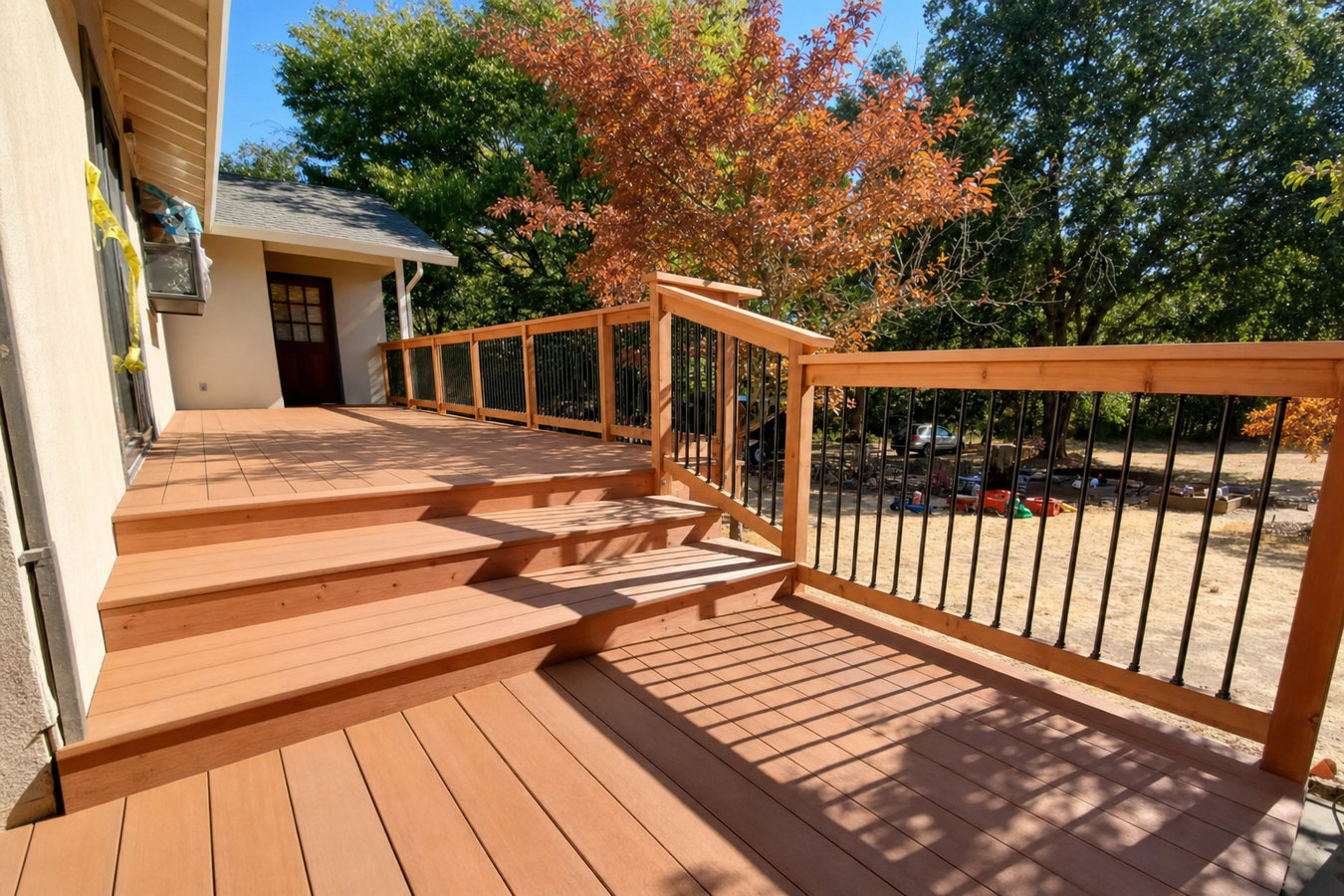
A wobbly railing or one that fails inspection is not a cosmetic issue - it is a liability. We install properly anchored railings in Apple Valley that meet current code, hold up to desert heat, and pass their permit inspection the first time.
Deck railing installation in Apple Valley covers new railing builds and full replacements on existing decks - most standard residential jobs are completed in one to two days once the permit is in hand, with two to four weeks total from signed contract to final inspection.
California requires a railing on any deck surface that sits 30 inches or more above the ground - it is not optional. Many Apple Valley homes built in the 1980s and 1990s have raised wood decks with railings that were installed under older standards, and those older railings often fall short on height, post anchoring, or baluster spacing by today's rules. If your home inspector or a buyer flags the railing during a sale, a permitted replacement is almost always less expensive and less stressful than a negotiated repair credit at closing.
If you are building a new deck and need railing included from the start, our multi-level decks service integrates railing engineering directly into the structure so posts and frames are designed as one system.
Stand at the edge of your deck and push the top rail sideways with moderate force. If it moves or flexes at the base of any post, the railing is no longer doing its job. A railing that wobbles is a falling hazard - particularly for children and older adults using the deck regularly.
Apple Valley's intense summer heat and UV exposure dry out wood railings faster than in most parts of California. Run your hand along the rail and posts - deep cracks, splinters, or soft spots where the wood feels spongy mean the material has broken down beyond what paint or stain can fix. At that point, replacement is safer and more cost-effective than continued patching.
Measure from the deck surface to the top of your railing. If it is under 36 inches, it does not meet California's current safety standard. Older Apple Valley homes - particularly those built before the 1990s - often have railings installed under more lenient rules that are now out of compliance. A buyer's inspector will flag it.
The vertical pieces between the top and bottom rails must be close enough together that a 4-inch sphere cannot pass through - in practical terms, a young child should not be able to get their head through the gap. If you can easily slide your fist between the balusters, the spacing is too wide and poses a real safety risk. This is one of the most common code issues found on older Apple Valley decks.
We install wood, composite, aluminum, and cable railing for decks of all sizes across Apple Valley. Every installation starts with the post anchoring - we bolt posts through the deck frame rather than surface-screwing them to the decking, which is the difference between a railing that feels solid and one that wobbles within a season. If you are building a new multi-level deck and need railing on multiple platforms and staircases, our multi-level decks service integrates railing design into the overall structure from the start rather than treating it as an add-on.
Material choice matters more in Apple Valley than in most of California because of the sustained heat and UV intensity. We walk every homeowner through the real trade-offs between wood, composite, and aluminum before they commit to a material. If your neighborhood has an HOA with style or color restrictions, we help you identify options that satisfy both the HOA's rules and the town's safety requirements. If you are also considering a larger deck addition alongside the railing, our custom deck design and build service covers both in a single project. We pull the permit, coordinate the Town of Apple Valley inspection, and do a final walkthrough with you before we consider the job done.
Suits homeowners who want maximum durability with minimal maintenance - aluminum does not crack, warp, or fade in Apple Valley's intense sun and triple-digit summer heat.
Suits homeowners who want the look of wood without the maintenance burden - composite holds up well to UV and heat and typically needs only occasional rinsing to stay clean.
Suits homeowners who want the lowest upfront cost and are prepared to refinish the wood every two to three years to keep it protected in the desert climate.
Suits homeowners who want a modern, open look that does not block the view - best on decks where the visual appeal of the yard or surrounding landscape is part of the experience.
Apple Valley sits in the Mojave Desert and regularly sees summer temperatures above 100 degrees with year-round UV intensity that is among the highest in California. That combination degrades wood railings noticeably faster than in coastal or mountain communities. A wood railing that might last eight or ten years in a mild climate can start cracking and drying out within three to four seasons here if it is not properly sealed and maintained. When we recommend materials, we are choosing for the High Desert - not a generic California spec. Homeowners throughout the Victor Valley, including those in Victorville, face the same conditions and come to us with the same aging-wood questions after a few hot summers.
Apple Valley also has a substantial number of HOA-governed neighborhoods, particularly in planned communities built after the 1990s. Many HOAs have explicit rules about railing styles, colors, and materials on visible exterior structures. Before you finalize any material or color choice, we help you check your HOA's requirements and find options that satisfy both the association's guidelines and the town's safety rules - so you are not redoing the work because of a detail no one caught. Homeowners in Hesperia face similar HOA landscapes and reach out to us regularly for help navigating that part of the process. Getting approval in writing before installation starts saves real headaches down the line.
Reach out by phone or through the form and we will get back to you within one business day. We will ask a few basic questions about your deck size, your current railing condition, and whether you have a material preference in mind.
We come out, measure the deck perimeter, check how the existing posts are anchored, and assess the overall deck frame condition. We walk you through wood, composite, and aluminum options with honest trade-offs for Apple Valley's climate - then give you a written estimate before you commit to anything.
Once you approve the estimate, we file the permit application with the Town of Apple Valley and handle any HOA submission your neighborhood requires. Permit approval typically takes a few business days to a couple of weeks. You will not have to navigate the permit office yourself.
Most installations are completed in one day. We remove the old railing, anchor the new posts through the frame, install rails and balusters, and check spacing and alignment throughout. The town inspector signs off, and we walk the finished railing with you before we leave.
Free on-site estimate. No pressure. We handle the permit and inspection - you just use the deck.
(442) 446-6233A railing is only as strong as its post anchoring. We bolt posts through the deck framing rather than surface-fastening them to the decking boards - the method that resists sideways force when someone leans against the rail. The American Wood Council identifies post anchoring as one of the most critical factors in railing structural performance.
We pull the permit through the Town of Apple Valley before any work begins and schedule the inspection after installation. Your finished railing is documented in your home's official record, which protects you at sale time and eliminates the liability that comes with unpermitted structural work.
We recommend aluminum or high-quality composite for most Apple Valley homeowners because of the sustained heat and UV intensity here. We are honest about the trade-offs - if you prefer wood, we tell you exactly what the maintenance commitment looks like in this climate so you can make an informed decision.
A large share of Apple Valley's residential neighborhoods have HOA rules covering railing materials, colors, and styles on visible exterior structures. We help you identify compliant options before any material is ordered - so you are not replacing a railing twice because the HOA flagged the first one.
Every one of these points reflects how we run projects - not just what we say on a website. Call to talk through what your specific deck needs and get a straight answer.
Planning a new deck alongside the railing? We design and build the whole structure from the ground up.
Learn MoreNeed railing on multiple platforms and staircases? Multi-level builds integrate railing engineering into the full structure from day one.
Learn MoreOur calendar fills fast in spring - lock in your date before summer heat sets in and a wobbly railing becomes a bigger problem.