Loading...
Serving Apple Valley, CA and surrounding areas. (442) 446-6233
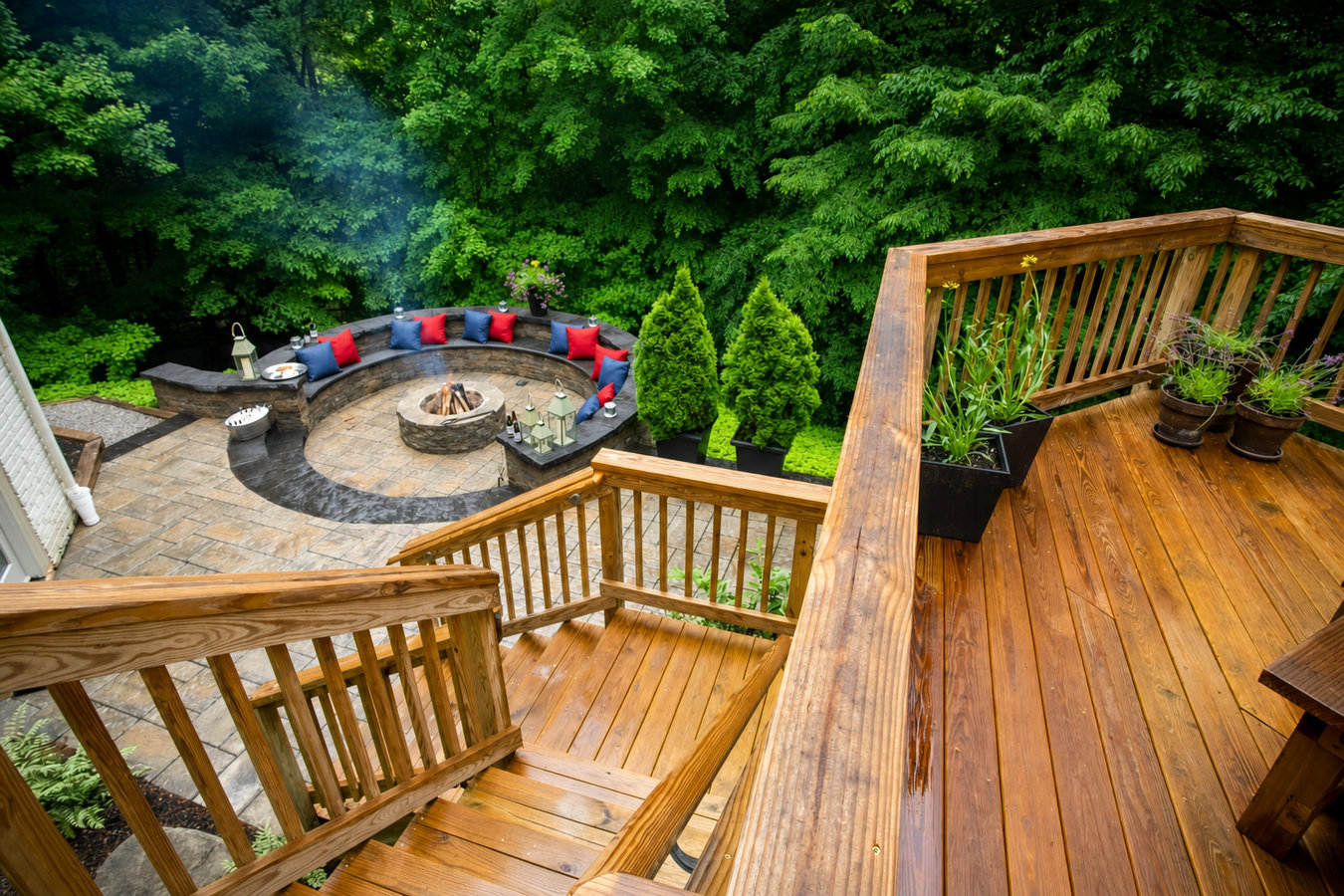
Your sloped yard is not a problem - it is a building opportunity. We design and build connected multi-level decks that follow your grade and give you outdoor rooms your family will use every day.
Multi-level decks in Apple Valley are connected outdoor platforms built at different heights to follow a sloped yard or separate distinct outdoor activities - most projects run two to four weeks of construction once permits are approved, depending on size and soil conditions.
If your backyard drops away from your back door or your single-level deck feels perpetually cramped, a multi-level design solves both problems at once. Each platform can have its own purpose - one for dining, one for lounging, one for a hot tub or grill station - and stairs connect them into a cohesive space that feels intentional rather than pieced together. Apple Valley homeowners with sloped lots often find that a multi-level deck is more practical and less expensive than grading the yard flat and pouring a large patio.
When you are ready to get started, our custom deck design and build process walks you through every decision - from the overall layout and level count to the material that will hold up best in this climate.
If your lot falls away from the back door and there is no usable flat ground, a multi-level deck follows the slope instead of fighting it. Expensive grading and retaining walls are often the alternative - and usually the more costly one. This is a very common situation on Apple Valley lots east of Highway 18 where the natural desert terrain has significant grade changes.
If your current single-level deck has the grill, the dining table, and the chairs all fighting for the same square footage, a second level effectively doubles your outdoor living area without a full rebuild. Separating cooking from lounging solves the problem while keeping costs lower than starting over from scratch.
When the back door swings open to a small landing and a steep step-down to the yard, that is both inconvenient and a genuine safety issue. A multi-level deck creates a proper transition - the first platform sits close to the door height and stairs carry people safely down to yard level. This matters most when older adults or young children use the back door regularly.
Apple Valley summers regularly push above 100 degrees, and a single exposed deck with no shade options is often unusable from late morning to early evening. A multi-level layout creates room to add a pergola or shade structure on one level while keeping another open. If you have been avoiding your yard from June through September, a new layout combined with shade can change that.
We build two-level and three-level deck systems designed around your yard's actual grade rather than a one-size layout from a catalog. Every project starts with a site visit where we assess the slope, the soil conditions, and how the deck will connect to your house - including the ledger board attachment, which is the most structurally critical part of any raised deck. If you want to add a shade structure over one of the platforms, our deck railing installation service integrates fully with the multi-level framing so railings and posts are engineered as a single system rather than bolted on after the fact.
Material selection is a real decision in Apple Valley's climate. Pressure-treated wood is the most affordable starting point, and when paired with proper sealing it performs well in the high desert. Composite decking costs more upfront but requires far less maintenance and holds up to UV and triple-digit heat significantly better over the long run. Our custom deck design and build process lets us walk you through both options with real numbers so you can make an informed choice. We also handle permits, HOA submissions, and all Town of Apple Valley inspections from start to finish.
Suits homeowners with a moderate yard slope who want to separate a dining or cooking area from a lounging space, connected by a short stair run.
Suits homeowners with a steep lot who want distinct zones - one near the house for grilling, one mid-slope for dining, one lower for a fire pit or lounge area.
Suits homeowners who want maximum durability with minimal maintenance in Apple Valley's intense heat and sun - composite boards resist UV fading and surface cracking far better than wood.
Suits homeowners who want a cost-effective build and are willing to commit to periodic staining and sealing to keep the wood protected in the desert climate.
Apple Valley sits at nearly 3,000 feet in the Mojave Desert, where summer temperatures regularly exceed 100 degrees and the soil is often packed with caliche - a hard, chalky layer that can be as difficult to dig through as soft concrete. Both of those factors affect how a multi-level deck gets built here. Post holes need to go deeper than standard specs to stay stable in shifting desert soil, and contractors who are not familiar with the local conditions often discover the caliche problem after they have already lowballed the digging labor. We account for caliche during the estimate visit so there are no surprises when the auger hits hard ground. Homeowners in Victorville and throughout the Victor Valley face the same soil and climate conditions, and we bring the same approach to every project we take on in the area.
Apple Valley has a significant number of HOA-governed neighborhoods, particularly in planned communities built after the 1990s. Many HOAs require design approval before a permit can even be submitted, and rules often cover materials, height limits, and how close a deck can sit to the fence line. We help you navigate that process before a single post goes in the ground. Homeowners in Hesperia face similar HOA landscapes and often reach out to us after having a project stalled by a missed approval step. Getting the sequence right - HOA first, then permit, then construction - keeps your project on schedule and avoids costly rework.
Reach out by phone or through our contact form and we will get back to you within one business day. We will ask a few basic questions about your yard and schedule a free site visit - we do not quote multi-level projects over the phone because the slope and soil conditions vary too much from lot to lot.
We come to your yard, assess the slope, check for irrigation lines or utility boxes, and walk through material options suited to Apple Valley's climate. You get a written estimate that breaks out materials, labor, and permit fees separately - no vague lump sums.
We submit the HOA design packet if your neighborhood requires it, then file the permit application with the Town of Apple Valley. Permit approval typically takes one to three weeks. We handle all the paperwork - you will know the status throughout but will not have to chase anyone.
The crew digs post holes, sets footings, frames the structure, installs decking and stairs, and finishes the railings - all under permit. A town inspector visits during framing and at completion. We walk you through the finished deck and hand over the final inspection approval for your home records.
Free on-site estimate. No pressure. We handle permits and HOA submissions from start to finish.
(442) 446-6233We specify footings sized for caliche soil and the wind loads common in Apple Valley - not the minimum spec from a coastal California job. That matters on a multi-level deck where the post depth and ledger connection carry real structural loads across multiple platforms.
Every multi-level deck we build in Apple Valley is permitted through the Town of Apple Valley Building Division. A permitted project is documented in your home's official records - which matters at sale time and protects you if there is ever a question about the work. We have never asked a homeowner to start without a permit in hand. According to the North American Deck and Railing Association, permitted deck construction is one of the clearest indicators of a contractor operating above board.
Our written estimates break out materials, labor, and permit fees as separate line items. You can see exactly what you are paying for and compare it against other quotes without guessing what is included. We do not give phone quotes for multi-level projects - slope and soil conditions vary too much to price fairly without a site visit.
A large share of Apple Valley's planned communities require HOA design approval before a permit can be submitted. We prepare and submit the HOA packet as part of our project management so homeowners in those neighborhoods do not get surprised by a stop-work order after construction begins.
These are not selling points - they are the baseline we hold ourselves to on every project. Call us to see how we approach your specific lot and yard conditions.
Compliant, properly anchored railings for every level and stairway on your multi-level deck.
Learn MoreStart with a blank slate - full design and build service for multi-level, single-level, and specialty decks.
Learn MorePermit slots and build schedules fill fast in spring - contact us now to lock in your start date before summer heat sets in.