Loading...
Serving Apple Valley, CA and surrounding areas. (442) 446-6233
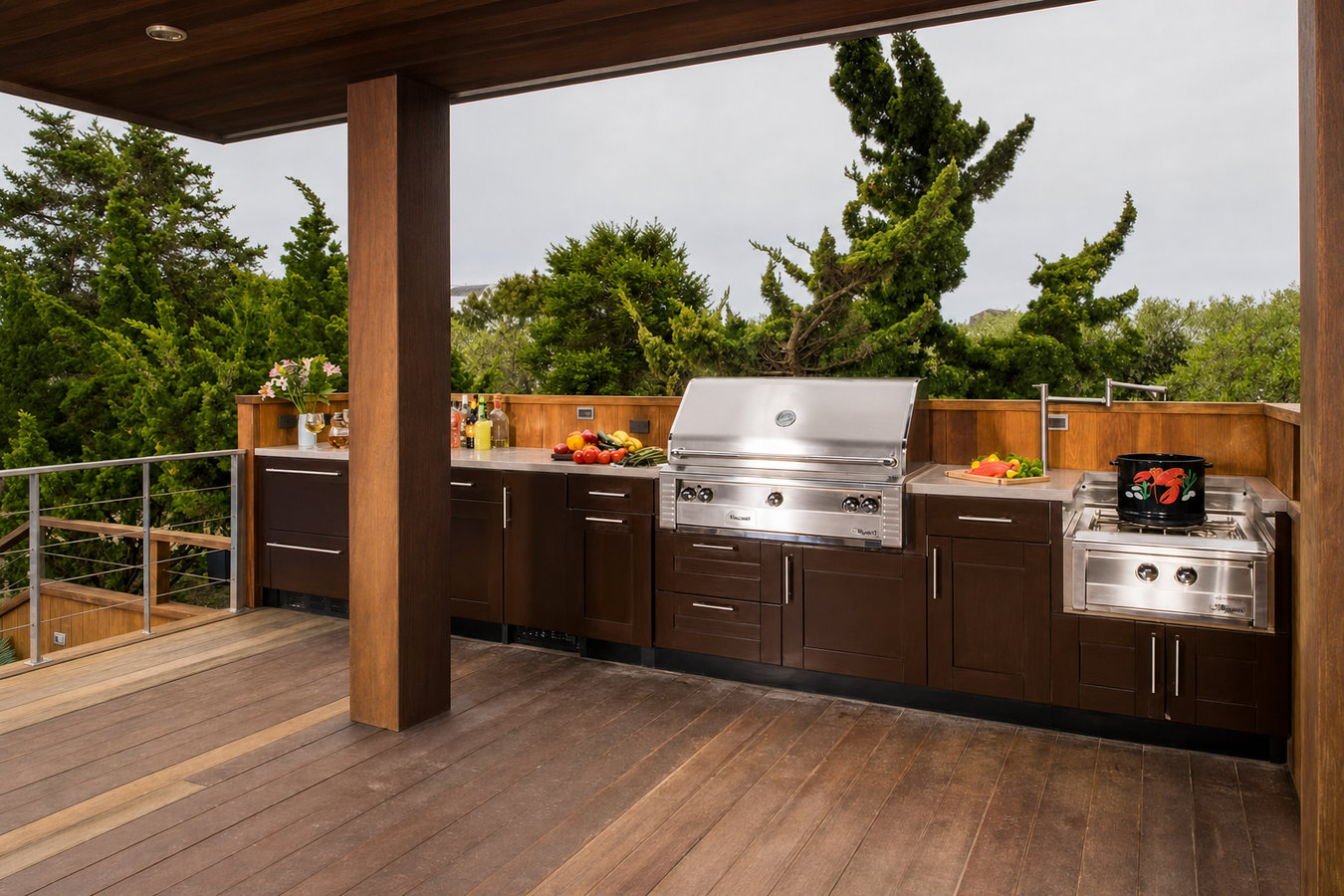
Stop hauling a portable grill across the patio every weekend. We build outdoor kitchen decks in Apple Valley with the structural framing, material choices, and permits needed to hold up in High Desert conditions for years.
Outdoor kitchen decks in Apple Valley combine a structurally reinforced deck platform with built-in cooking and entertaining features - grill, countertops, sink, and sometimes refrigeration - all integrated into the deck frame rather than sitting on top as separate pieces, and most mid-size builds take four to six weeks from permit approval to final walkthrough.
Apple Valley has roughly 280 sunny days a year, which means an outdoor kitchen here gets genuine year-round use - not just a few weeks in the fall. That is more value than in most California climates, but it also means the structure faces constant sun, temperature swings, and periodic High Desert winds every single year. The deck frame needs to be built to carry the weight of heavy built-in appliances, not just patio chairs. A built-in grill, stone countertop, and outdoor refrigerator can add hundreds of pounds to a small area - a deck framed like a standard platform will flex and fail over time. If you want to pair your outdoor kitchen with shade overhead, our multi-level deck options can incorporate a pergola cover or upper-level structure, and our custom deck design and build service starts from scratch if you want a fully tailored plan.
We handle the permit applications - including separate gas and electrical permits when your project requires them - and we coordinate with the Town of Apple Valley's Building and Safety Division from start to finish. You do not need to manage any of that on your own.
If you are balancing plates on a folding table and walking back inside for every utensil or cold drink, you have outgrown what a standalone grill can offer. An outdoor kitchen deck gives you a permanent, organized space where everything is within reach - and turns outdoor cooking into an experience rather than an improvisation.
Apple Valley summers regularly push past 100 degrees, and a flat, open backyard with no overhead cover becomes unusable for much of the day. If your family retreats inside by mid-morning during peak summer, a covered outdoor kitchen deck - with a pergola or shade structure integrated into the design - can extend the usable hours and make your backyard work for you again.
If your current deck has boards that flex underfoot, gaps that have widened over the years, or surface damage from High Desert sun, it may not be structurally sound enough to support the weight of built-in kitchen equipment. A deck fine for patio furniture is not automatically ready for a 200-pound grill and a stone countertop - the framing underneath needs to be reassessed before adding that load.
If family gatherings or neighborhood get-togethers always end up packed into your indoor kitchen, an outdoor kitchen deck solves that by moving the cooking and serving outside. Apple Valley's mild fall and spring weather - and many comfortable winter days - make this a genuinely year-round solution, not just a summer upgrade.
Every outdoor kitchen deck starts with the platform - and we size the framing and footings specifically for the weight of your planned kitchen components, not to a generic deck standard. From there, the kitchen layout is built into the frame: grill cutout, counter substrate, sink rough-in, and any gas or electrical lines needed. We use composite decking as our default surface recommendation for Apple Valley because it resists the fading, cracking, and splintering that High Desert UV and temperature swings cause in natural wood. For countertops, we work with porcelain tile and poured concrete - both of which handle heat and UV well without constant resealing. For homeowners who want to build out a larger entertainment complex, we can pair the outdoor kitchen with a multi-level deck that incorporates a raised dining area or lounge level, or start with a full custom deck design and build if you want everything drawn and planned from scratch.
Apple Valley's High Desert winds are a real design factor for outdoor kitchens. An open-flame grill in a yard with 50-mph gusts needs a thoughtful layout - some wind protection on the windward side, and appliances positioned so the cook is not fighting the breeze. We factor your yard's orientation and typical wind direction into the deck layout during the design conversation, not as an afterthought. We also account for dust infiltration into appliances, which is a genuine maintenance issue in this climate when appliances are not properly covered or sealed.
Suits homeowners who want a functional cooking space without full kitchen utilities - a built-in grill, counter surface, and storage underneath, all integrated into the deck frame.
Suits homeowners who want a complete outdoor cooking and entertaining setup - grill, sink, refrigeration, and electrical outlets - with gas and electrical lines run and permitted during the build.
Suits Apple Valley homeowners who want shade and weather protection overhead - a pergola or solid roof structure integrated into the kitchen deck design to extend usable hours in summer heat.
Suits homeowners with an existing deck in good structural condition who want to add a built-in kitchen area without replacing the whole platform - requires a structural assessment first.
Apple Valley sits at roughly 2,900 feet in the Mojave Desert, where UV radiation is higher than at coastal California elevations and temperatures can swing 30 to 40 degrees between a summer morning and afternoon. Those swings cause materials to expand and contract repeatedly - stressing joints, fasteners, and countertop edges over time. A contractor who builds regularly in the High Desert accounts for this in how they fasten boards and seal edges. One who mostly works on the coast may not. The North American Deck and Railing Association publishes best practices for outdoor structure materials and load calculations that we follow on every build.
Permit requirements are another local factor worth understanding. Most outdoor kitchen deck projects in Apple Valley require a building permit through the Town of Apple Valley's Building and Safety Division, plus separate permits for gas and electrical work when those utilities are involved. Getting HOA approval before permits are pulled matters too - many Apple Valley neighborhoods near the Bear Valley Road corridor are governed by associations with rules on structure height, setbacks, and materials. We have worked through this process with Apple Valley homeowners many times and know what documentation each step requires. Homeowners in Victorville and Hesperia face similar permit and climate conditions, and we build to the same standard across the Victor Valley.
When you call or submit a contact form, we get back to you within one business day. The first conversation covers the basics - size, utilities needed, HOA status, rough budget - so we can set up the right on-site visit.
We visit your backyard to measure the space, check where utilities run, and walk through what you actually want. You leave with a written estimate that breaks down what you are paying for - not a rough number to pin down later.
We submit all permit applications - building, gas, and electrical as needed - to the Town of Apple Valley before any work begins. This typically takes one to three weeks. We track the status and keep you informed so the wait does not catch you off guard.
Once permits are approved, the crew starts with footings and framing, then utility rough-in, then surfaces and kitchen components. County inspectors check the work at key stages. After the final sign-off, we walk you through maintenance for your specific materials and climate.
Free on-site visit. We handle permits and HOA documentation. No obligation until you have a full written quote.
(442) 446-6233We size footings and deck framing specifically for the weight of your planned kitchen components - not to a standard foot-traffic deck spec. A built-in grill, stone countertop, and outdoor refrigerator add significant load to a concentrated area. Building the frame to carry that weight from day one means the deck stays solid, not one that develops flex and bounce within a few years.
We recommend composite decking and heat-tolerant countertop surfaces - not whatever is easiest to source. Materials that perform fine in coastal California fade, crack, or warp within a few seasons in the Mojave. The difference shows up in year three, not on day one, and we want your outdoor kitchen to look as good in year five as it did the week it was finished.
Outdoor kitchen decks often require three separate permits - building, gas, and electrical. We manage all of them with the Town of Apple Valley so you do not have to navigate multiple agency contacts. Permitted work means inspected work, which protects you from hidden structural problems and keeps your home value intact at resale. Verify any contractor you consider holds an active California license at the California Contractors State License Board.
Apple Valley gets significant wind events, particularly in spring and fall. We factor your yard's wind exposure and orientation into the deck layout during the design conversation - not as an afterthought. That means a grill positioned where the cook is not fighting a 50-mph crosswind, and a structure that does not require a windscreen to function safely.
Building an outdoor kitchen deck in the High Desert is not the same as building one in a milder climate. The structural requirements, material choices, and permit complexity are all higher here - and the contractors who do this work well in Apple Valley know that from experience, not theory, just as other skilled outdoor kitchen decks builders have found in other climates with real seasonal demands.
Add a raised dining level or step-down lounge area to your outdoor kitchen deck for a more complete entertaining layout.
Learn MoreStart your outdoor kitchen project from a fully custom deck plan designed around your backyard, your kitchen needs, and your budget.
Learn MorePermit season books up fast in San Bernardino County - reach out now and we will get your on-site visit scheduled before the construction calendar fills.